
THE PUNCH LIST / SOCIAL & VIDEO
Why does my business have to be a micro-influencer now?
The straight answer
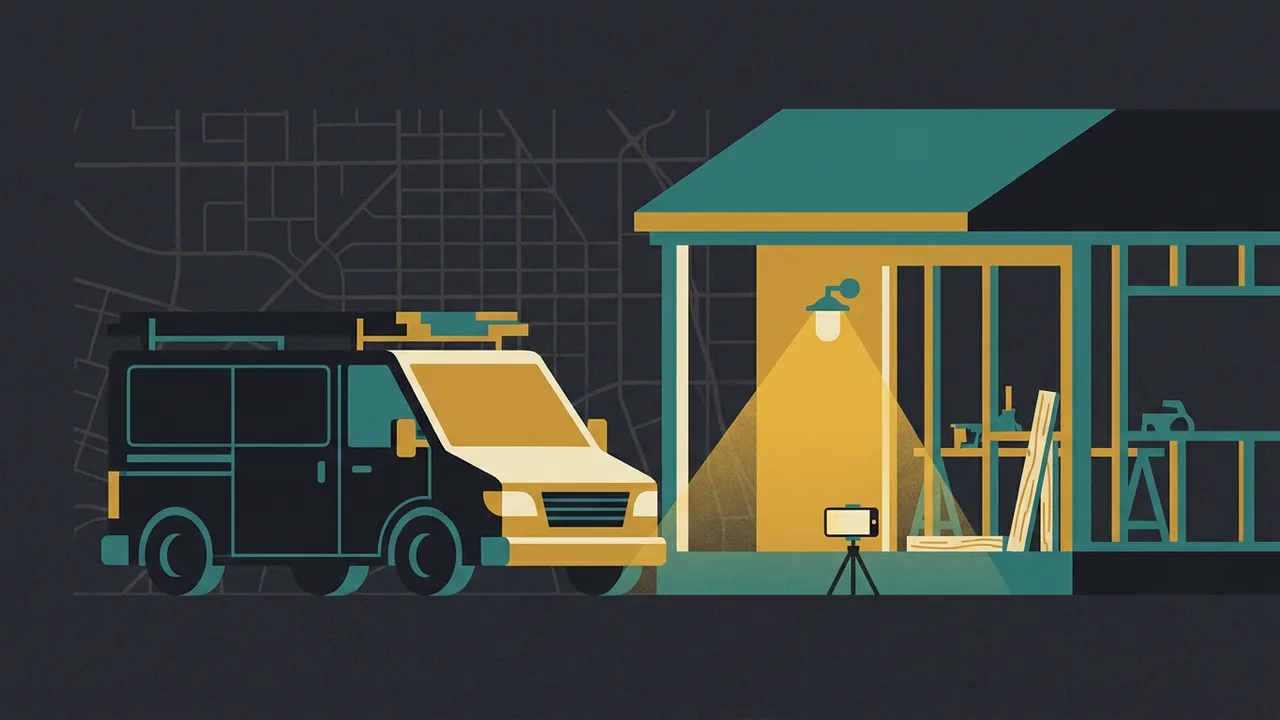
Because the people who hire you now check who you are before they call, and because Google and the AI engines rank and recommend businesses they can see are real, active and known in their town. A micro-influencer in this sense is not someone famous; it is an owner with a face customers recognize, a steady stream of real jobs on camera, and a presence on the two or three channels their market actually uses. Twenty minutes a week, a phone, and a routine are enough — and everything you post should point back to a website that turns the attention into a call.
The Punch List / What to do, in order
- Put your face on it. The owner’s photo on the About page, the Business Profile and every social profile — a truck logo is not a person anyone trusts.
- Pick two channels your customers actually use, not six. For most home services in Middle Tennessee that is Facebook and the Business Profile, with Instagram or Nextdoor third and YouTube Shorts for the visual trades.
- Film every job for two minutes: the problem when you arrive, one thing you are doing about it, the finished result. Vertical, on the phone, in daylight. Ask the homeowner first.
- Post three times a week, same days, same time. Cadence beats polish; a year of ordinary Tuesdays outperforms one good month.
- Say the price and the reason. “What this job cost and why” is the post people save, and it filters out the callers who were never going to hire you.
- Every post points home: the service page for that job, not a generic link. The site is the base; the channels are the signposts.
- Ask for the review on the same visit you filmed, and post the review. Reviews are the influencer content you did not have to make.
What changed
Ten years ago a homeowner found a contractor in a directory or from a neighbor, called, and decided on the phone. Now the neighbor’s recommendation arrives as a name in a Facebook thread, and the homeowner looks that name up before dialing: the Business Profile, the reviews, the photos, the Facebook page, maybe a video. What they are checking is simple — is this a real business, run by a real person, doing this work, here, now? If the answer is a logo, a stock photo and a page last updated two years ago, they keep scrolling.
The engines are running the same check. Google’s local ranking leans on prominence — how well known a business is, on the web and off — and on activity: photos, posts, reviews arriving, questions answered. The AI engines, when asked whom to recommend, favor the business that is described the same way in many places and that has a named person behind it, because that is what a trustworthy entity looks like to a model. A business that is visible, current and human ranks and gets recommended. One that is silent does not, however good the work is.
What “micro” means here
Not followers. A roofer in Spring Hill does not need ten thousand strangers; they need the few thousand homeowners in their service area to have seen their face and their work more than once, so that when the roof leaks, the name is already familiar. That is the whole job: be known, in your town, for your trade, by the people who will need you.
This is why the numbers social platforms show you are mostly the wrong ones. Reach in your ZIP codes, saves, shares into local groups, messages that say “saw your video,” and — the one that counts — “how did you hear about us” answers in your CRM. Those tell you whether the town knows you.
What to post (the same six things, forever)
- The job in progress. What you found, what you are doing, why. Thirty seconds. This is the post that proves you do the work.
- Before and after. Two photos or one video, no music needed. The most shared thing a trade can produce.
- What it cost and why. A real job, a real number, and the three things that drove it. Owners fear this post; customers love it, and it pre-qualifies the ones who call.
- The mistake you see every week. The gutter that was never cleaned, the water heater nobody flushed, the paint over unprimed siding. Useful, and it makes you the person who knows.
- The customer, if they will. A sentence from them at the door, or their review read out. Ask; most say yes.
- The crew and the truck. Who is coming to the house. People hire people.
You do not need ideas. You need the routine: film the six, rotate them, post on schedule. Nothing you post needs to be clever, and it is better if it is not.
Where, and how often
Two channels, done every week, beat six done in bursts. Choose by where your customers are, not where the marketing advice is:
- Google Business Profile posts and photos — always. They sit on the listing the customer sees when they search you, and they tell Google the profile is alive.
- Facebook — the local groups are where recommendations actually happen for home services, and a page with recent real work is what people click through to.
- Instagram — for the visual trades: painting, landscaping, closets, kitchens, roofing. The same vertical video goes here as a Reel.
- YouTube Shorts — the same clip again, and the one that Google search can surface. There is a separate post on why.
- Nextdoor — worth a business page in the neighborhoods you serve; people ask for a “good plumber” there weekly.
Three posts a week, the same days. The one video you filmed is posted to all of them; the work is in the filming, not the posting. Twenty minutes a week once the habit is in.
The rules
- Ask before you film at someone’s house, and never show the address, the street number or the neighbors. Most homeowners say yes when asked plainly.
- Never invent a review, a number or a customer. The whole point is that you are real. One fake post undoes a year of real ones.
- Keep the politics and the venting off the business channels. You are being looked up by people deciding whether to let you into their home.
- Reply. A comment answered within the hour is worth more than the post; a question ignored is a lost call.
- Stay in your lane. Post about your trade in your town. The moment it becomes a lifestyle channel, the people who needed a roofer stop following.
Why the website is the point of all of it
A follower is not a lead. The attention you build on channels you do not own has to land somewhere you do: a fast site where the service page for the job you just filmed answers the questions, shows the same video, and has the phone number and the form at the top. Embed the videos on the pages they belong to. Link each post to that page, not to the home page. Count the visits in your own traffic dashboard, by channel, so you know which of the two channels is producing calls and which is producing likes.
This is also what makes the influencer work count for search. A video on the water heater page, a named owner on the About page, reviews that mention the same job the video shows — that is a business the engines can verify. The channels make you known; the site makes you citable.
The check / Three live lookups · One a month per business
Your business, your city, what you do.
Type the name the way it appears on Google, the city you work from, and what you do the way a customer would say it (“roofing contractor”, “plumber”, “house painter”). Free, no sign-up. The result is on this page in under a minute.
Takes about twenty seconds. It asks Google’s AI Mode live — not a cached answer — then checks Google Maps at your address. One check a month per business.
Finding your Business Profile…
Google’s AI answer
Google Maps at your address
Your profile
Want it done instead?
We build the base the posts point to, and we can put the videos in front of your ZIP codes.
A site with a page for every service, the videos embedded where they belong, a named owner the engines can verify, and a traffic dashboard that shows which channel produced the call. If you want the posts to reach past your followers, the Meta ads layer runs the same real footage to the homeowners in your service area.
FAQ / Answers
Questions people also ask
Do I really have to be on camera?
Someone with a face and a name does — it does not have to be the owner every time, but it cannot be only a logo. People hire people, and both customers and the engines trust a business with a visible, named person behind it. A crew lead or an estimator who is comfortable on a phone camera works fine.
What should a small business post if nothing exciting happens?
The ordinary job. The problem you found, one thing you did about it, the result — filmed vertically on a phone in thirty seconds. Before-and-after, what a job cost and why, and the mistake you see every week are the posts customers save. Nothing needs to be clever.
Read next / The Punch List
More answers.
Social & video / 5-minute read
Should my business have a YouTube channel — and are Shorts worth it?
What a YouTube channel does for a local business that Facebook cannot, why Shorts are the cheapest way in, what to film, and how it feeds the site.
Read the answer
Ads / 5-minute read
How do Meta ads and Google Ads work together for a local business?
Meta ads put your real work in front of homeowners who are not searching yet; Google Ads catch them the day they are. How the two connect and how to measure it.
Read the answer
SEO / 5-minute read
How do I get more Google reviews — and what do I do about a bad one?
The ask that works — same day, by text, with the direct link — the reply routine, what Google’s policy forbids, and the calm way to answer a one-star review.
Read the answerNEXT STEP
See what Google and the AI engines say about you — in a minute.
Tell us your trade and your city. Before we call, we check what the engines answer and who takes the calls today — so the first call is a straight answer on whether your market still has room.