
THE PUNCH LIST / SOCIAL & VIDEO
Should my business have a YouTube channel — and are Shorts worth it?
The straight answer
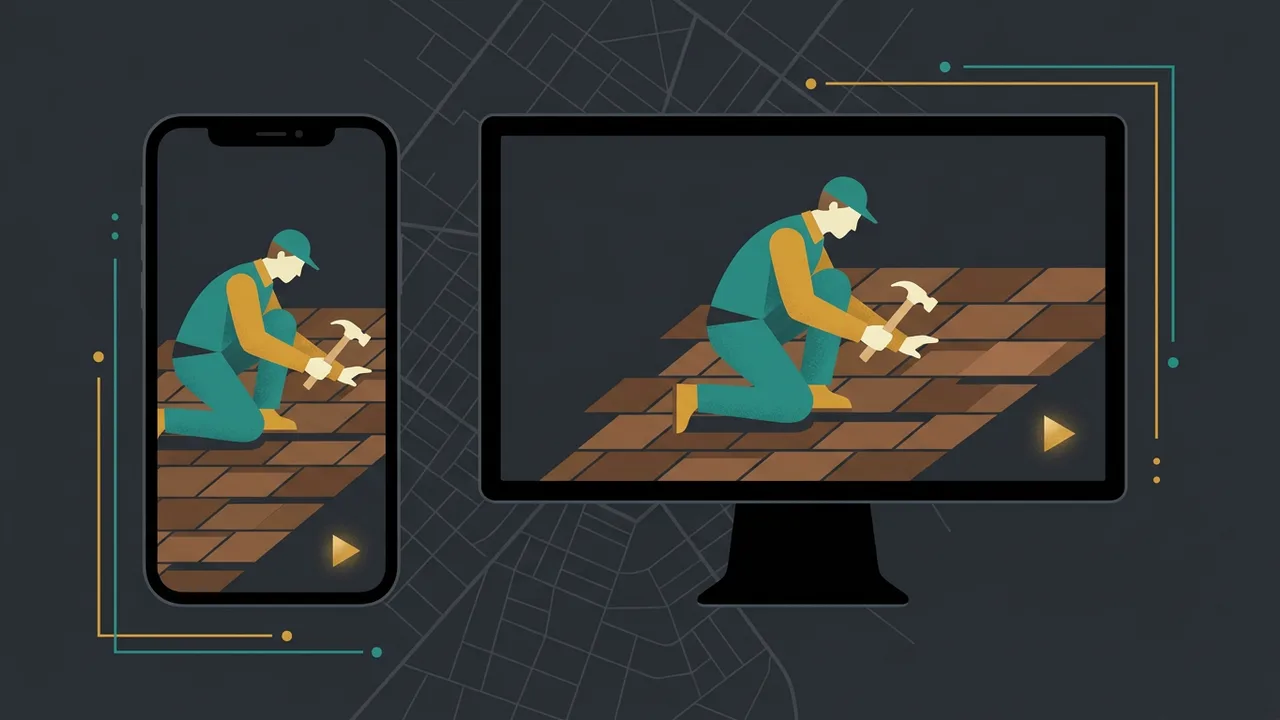
Yes, if you will post to it. YouTube is the one social channel Google search indexes and shows in its results and AI answers, so a video titled for the question a customer asks — what a roof replacement costs, how a tankless water heater is installed — can be found by strangers for years, which no Facebook post can do. Shorts are the cheapest way in: the same vertical phone video you already film for Instagram, under a minute, posted three times a week. Start there, keep the channel named and described exactly like the business, and embed every video on the service page it belongs to.
The Punch List / What to do, in order
- Open the channel under the exact business name, with the same description, phone, city and website link as the Business Profile. The channel is another profile the engines read.
- Film the job you are already doing: vertical, on the phone, thirty to sixty seconds, in daylight. That is a Short. Post three a week.
- Title every video as the question it answers — “How much does a roof replacement cost in Franklin, TN?” — not “Job in Franklin.” The title is what search reads.
- Once a month, make one longer video (three to eight minutes) on the question you get asked most. That is the one that ranks in Google for years.
- Put the city and the trade in the description, with a link to the matching service page and the phone number.
- Embed each video on the service page it belongs to, with VideoObject schema. The page gets a video; the video gets a home.
- Watch the YouTube channel in your own traffic dashboard and the “how did you hear about us” answers, not the view count.
Why YouTube, when you already post on Facebook
A Facebook post lives for a day and then is gone; nobody who did not see it that day will ever find it. A YouTube video is indexed by Google — it is Google’s own platform — and it appears in search results, in the video carousels, and increasingly inside the AI Overviews, for as long as it exists. A video that answers “how much does it cost to paint a house exterior in Nashville” made this year will still be found by a homeowner searching next spring.
That is the difference between a social channel and a search channel. Facebook and Instagram reach the people who already follow you, now. YouTube reaches strangers who are asking the question, later. A local business needs both, and only one of them compounds.
There is a second reason. When an engine — Google’s or anyone else’s — is deciding whether a business is real and knowledgeable, a channel of the owner explaining the work is about as strong a signal as exists — the search-side half of being the local influencer. It is a face, a name, a trade and a town, on record, repeatedly.
Why Shorts are the way in
Shorts are vertical videos of up to three minutes, shown in YouTube’s own swipe feed. For a contractor they are the same thirty-second clip you would post as an Instagram Reel or a Facebook video, uploaded one more place. No editing, no lighting, no script: the problem you found, what you are doing, the result.
They matter for three reasons. They cost nothing beyond the filming you should already be doing. YouTube shows them to people near you who watch home-improvement content, whether or not they subscribe. And they build the channel — subscribers, watch history, a body of work — that the longer videos will need in order to rank.
The trap is treating Shorts as the whole strategy. They are the daily practice. The monthly longer video is the one that answers a searched question thoroughly enough to be the result for it.
What to film, with a phone
- The cost question, answered. “What a water heater replacement costs and what changes it.” The single most searched question in every trade, and the one contractors refuse to answer. Answer it.
- The process, start to finish. A roof replacement in four minutes: tear-off, decking, underlayment, shingles, cleanup. Homeowners watch this before they call anyone.
- Should I repair or replace? With the actual thing in frame.
- What I found today. The Short. Thirty seconds.
- The before and after, with the one decision that made the difference.
- Questions from the phone this week, answered in a minute each.
- The walk-around after the job, with the homeowner if they are willing.
A phone, a cheap clip-on microphone for the longer ones, daylight, and the discipline to film every job. Say the town. Say the trade. Show your face at the start.
Setting the channel up so it counts
The channel is a profile, and the engines read it as one, so it has to match the others:
- The channel name is the business name, spelled exactly as it is on the Business Profile and the site.
- The About text says what you do, where, and for whom, in the same words as the site, with the phone number and the site link.
- A playlist per service — roofing, gutters, siding — so a viewer and a crawler can both see the shape of the business.
- Every title is the question; every description names the city and the service and links to that service page, not the home page.
- Captions on. YouTube generates them; check the trade terms.
How the videos feed the website and the engines
A video that lives only on YouTube helps YouTube. Embedded on the service page it belongs to, with VideoObject structured data (the markup Google documents) naming the video, its thumbnail, its length and what it shows, it makes that page the strongest version of the answer: text for the engines, video for the human, both saying the same thing. Every site we build carries the embed and the schema on the page for that service, and the video’s referrals show up in the site’s own traffic dashboard as their own channel.
Over a year that produces a set of pages each answering a searched question in text and on camera, by a named person, in a named town. That is what gets cited — by Google, and by the engines that write answers.
What to expect, honestly
The first months are quiet. Views are small, subscribers are few, and it feels pointless. The channel starts to matter when the longer videos begin to rank for their questions, which in our experience takes months of consistent posting, not weeks, and depends on the question being one people actually search. The Shorts keep you going in the meantime and keep the channel alive in YouTube’s eyes.
Measure the right thing. Not views: calls. The traffic dashboard on your site, the YouTube line in it, and the customer who says “I watched your video” on the phone. When those appear, the channel is working, whatever the subscriber count says.
Want it done instead?
Film the jobs. We will build the pages the videos belong on, and make sure the engines see them.
Every site we build has a page per service with the video embedded and VideoObject schema behind it, the channel listed as one more profile of the same entity, and a traffic dashboard that shows YouTube as its own channel next to the calls it produced.
FAQ / Answers
Questions people also ask
Is a YouTube channel worth it for a small business?
Yes, if it is posted to. YouTube is the one social channel Google search indexes and shows in results and AI answers, so a video answering a customer’s question is found by strangers for years, unlike a Facebook post. Shorts make the entry cost close to zero — the same phone video you already post elsewhere.
How long should a YouTube Short be for a business?
Thirty to sixty seconds is plenty: the problem you found, what you are doing about it, the result. Shorts can run up to three minutes, but the ones that get watched through are short, and watch-through is what YouTube rewards.
What should a contractor post on YouTube?
The cost question answered with a real job, the process start to finish, repair-versus-replace with the actual thing in frame, before-and-after, and the questions from this week’s phone calls. Title each one as the question it answers, say the town, and show your face at the start.
Do YouTube videos help my website rank?
Embedded on the matching service page with VideoObject schema, yes: the page becomes the fullest answer to its question, in text and on camera, and video results appear in Google search and AI answers. A video that lives only on YouTube helps YouTube.
Read next / The Punch List
More answers.
Social & video / 6-minute read
Why does my business have to be a micro-influencer now?
Customers, Google and the AI engines all favor a business with a known face and real work on camera. What to post, where, how often, and the rules.
Read the answer
AI search / 5-minute read
Does my business need a blog?
A blog of generic articles does nothing for a local business. Pages that each answer one customer question do a great deal. What to write, and what to skip.
Read the answer
Ads / 5-minute read
How do Meta ads and Google Ads work together for a local business?
Meta ads put your real work in front of homeowners who are not searching yet; Google Ads catch them the day they are. How the two connect and how to measure it.
Read the answerNEXT STEP
See what Google and the AI engines say about you — in a minute.
Tell us your trade and your city. Before we call, we check what the engines answer and who takes the calls today — so the first call is a straight answer on whether your market still has room.