
THE PUNCH LIST / SEO
How do I get more Google reviews — and what do I do about a bad one?
The straight answer
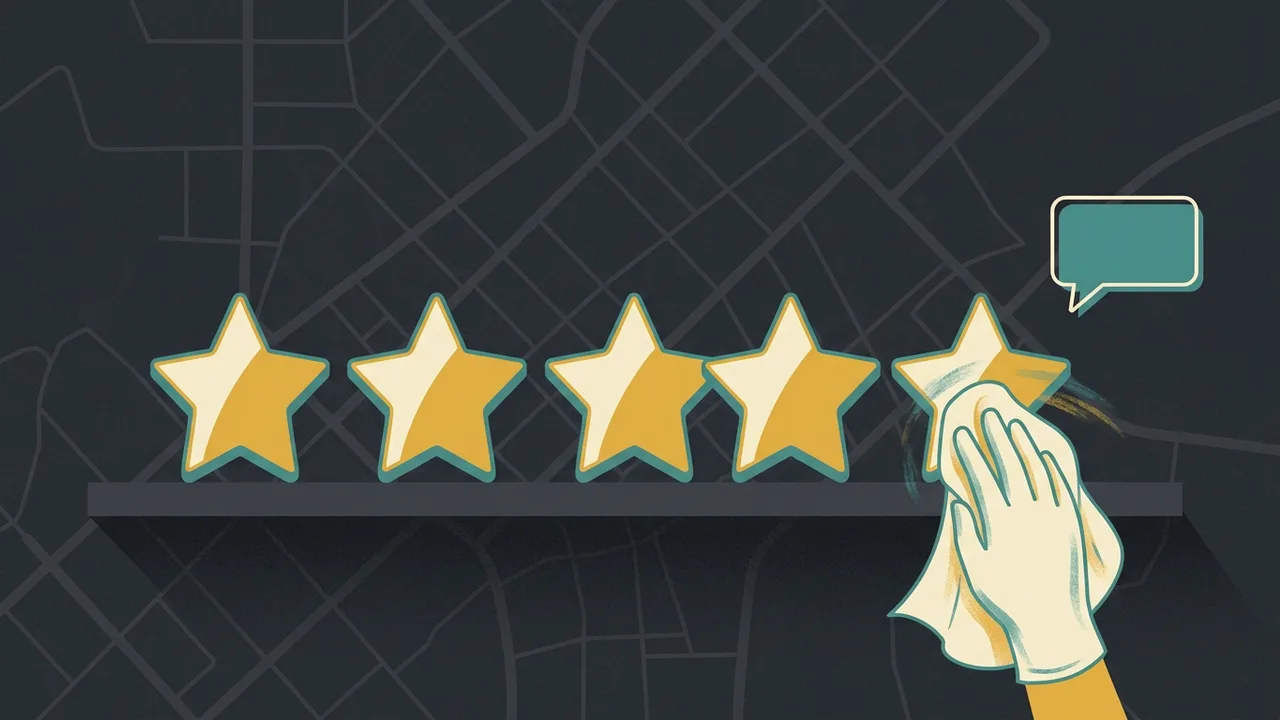
Ask every customer, on the day the job finishes, by text, with your direct review link, from the person who did the work — and make it part of closing the job, not a campaign. That one routine produces more reviews than anything else, and reviews arriving steadily matter more to Google than a burst. Reply to every review within a day. For a bad one: reply once, calmly, with the facts and an offer to make it right, then move on; flag it only if it breaks Google’s policy, and never argue in public.
The Punch List / What to do, in order
- Get your direct review link from the Business Profile (Ask for reviews) and put it in a saved text on every phone that talks to customers.
- Make the ask part of the job close: when the customer says “looks great,” the tech says “would you put that in a Google review? I will text you the link,” and sends it before leaving the driveway.
- Never offer anything for a review, never ask only the happy customers, never let staff or family write them. All three are against Google’s policy and all three are detectable.
- Reply to every review within a day — a sentence for a good one, naming the job; the calm four-part reply below for a bad one.
- For a review that breaks policy (fake, off-topic, a competitor, a customer you never served), flag it from the profile and, if it stays, use the review-management form. Do not expect speed.
- Put the best reviews on the site, on the page for the service they describe, with their date. Specifics an engine can quote live there.
- Track the pace, not the total: reviews per month, every month. That is the number Google’s prominence factor reads.
Why the pace matters more than the total
Google’s own description of prominence names review count and score as inputs. In practice what moves the map pack is reviews arriving — a business gaining four a month, every month, reads as busy and current, while one with two hundred reviews and nothing new since 2023 reads as a business that may have changed hands. The recency also matters to the customer, who reads the last five and not the first fifty.
The AI engines read reviews too, and not just the stars — it is one of the ways a business gets recommended by ChatGPT. When ChatGPT or Google’s AI Mode explains why it named a business, the reasons come from the review text: “praised for showing up on time,” “customers mention clean-up.” The words in your reviews are the words the engines use to describe you.
The ask that works
Every contractor knows they should ask. Most do not, because the ask feels awkward, gets delayed to “when I do the invoice,” and then is forgotten. The fix is to make it a step in closing the job, done by the person the customer just thanked:
- The moment: the walk-through, when the customer says the work looks good. That is the peak of their goodwill and it never comes back.
- The words: “Would you mind putting that in a Google review? It is the thing that helps us most. I will text you the link right now so it is easy.”
- The link: the short direct link from the Business Profile, saved as a text template on every phone. Not “search for us on Google.” One tap, or it does not happen.
- The follow-up: one reminder, two days later, from the office: “Thanks again for having us out — here is that review link in case it got buried.” Then stop.
Done on every job, this alone will outproduce any review software. The software is useful for the follow-up and the tracking — that is the CRM’s job — but it does not replace the tech asking at the door.
What Google’s policy forbids
Google’s review policies are short and worth reading once. The parts that catch small businesses:
- No incentives. No discount, gift card, entry in a drawing or anything else in exchange for a review, good or bad.
- No gating. You may not ask only the customers you expect to be happy, or route unhappy ones to a private form and happy ones to Google. Ask everyone.
- No conflicts of interest. Employees, owners, family and anyone paid to review may not review. Neither may you review a competitor.
- No fakes, obviously. Bought reviews are removed in batches, and a listing built on them can be suspended.
Google also states it may restrict or remove reviews, and even limit a business’s ability to receive them, when it detects patterns like these. A wave of reviews disappearing is worse than the reviews never having existed, because the customer who counted 120 last week now sees 60 and wonders why.
Reply to all of them
A reply is written for the next reader, not for the reviewer. For a good review, one sentence that names the job: “Thanks, Karen — glad the new gutters held up through last week’s storm.” It shows the business is attentive and it puts one more specific in the record.
For a bad review, four parts, calm, once:
- Acknowledge without arguing: “I am sorry the experience did not match what you expected.”
- State the facts briefly, if they matter: the date, what was done, what was quoted — no accusations, no “as we explained.”
- Offer to make it right, off the platform: “Please call me directly at the office and I will sort it out personally.”
- Stop. One reply. No second round, whatever they add. The next reader is judging your composure, not the score.
A one-star review answered this way does you more good than harm: it is proof that you are a business someone can deal with when things go wrong, which is what everyone hiring a stranger for their home is trying to find out.
When a review can be removed, and when it cannot
Google removes reviews that break its policy — spam, fake, off-topic, from someone with a conflict of interest, containing personal information, or about a different business. It does not remove reviews for being unfair, exaggerated or wrong about what happened. “The customer is lying about the price” is a reply, not a removal.
If a review clearly breaks policy: flag it from the profile, wait, and if it stands, use the review-management tool to appeal. Keep evidence — the invoice showing the person was never a customer, the competitor’s name matching the reviewer’s. Expect the process to be slow and often unsuccessful, and write the reply anyway, because it may be there for a long time.
Put the reviews to work
A review that mentions the job, the town and the crew member is a specific an engine can quote. Put those on the site — on the service page they describe, not a generic testimonials page — with the reviewer’s first name, the date, and the source. Read the best ones aloud in a Short. Screenshot them for the Business Profile posts. The review is content you did not have to write, and it is the most convincing kind, because a customer wrote it.
And ask the right customers for the wording that helps most. Not scripts — never scripts — but a nudge: “If you can, mention the town and what we did; it helps people find us.” That is allowed, and it is the difference between “great job!” and “replaced our roof in Spring Hill in one day and cleaned up every nail.”
The check / Three live lookups · One a month per business
Your business, your city, what you do.
Type the name the way it appears on Google, the city you work from, and what you do the way a customer would say it (“roofing contractor”, “plumber”, “house painter”). Free, no sign-up. The result is on this page in under a minute.
Takes about twenty seconds. It asks Google’s AI Mode live — not a cached answer — then checks Google Maps at your address. One check a month per business.
Finding your Business Profile…
Google’s AI answer
Google Maps at your address
Your profile
Want it done instead?
We can make the ask automatic and draft every reply for you to approve.
The AI automation layer sends the review request by text the day the job closes, follows up once, drafts a reply to every new review in your voice for you to approve, and reports the pace monthly against the businesses in your map pack. Nothing is posted in your name without your say-so, and no assistant of ours ever writes a review.
Layer 04 / Visibility
Local & Technical SEO
Reviews, the profile and the listings are the prominence work in the monthly SEO layer.
The local seo layerLayer 08 / AI in the business
AI Automation
Review requests sent automatically on the day, and replies drafted for you to approve — never posted in your name without it.
The ai automation layerFAQ / Answers
Questions people also ask
Is it against Google’s rules to ask for reviews?
No. Asking is allowed and expected. What is forbidden is offering anything in exchange, asking only the customers you expect to be happy, and reviews from employees, family or anyone with a conflict of interest. Ask everyone, on the day, with the direct link.
Can I remove a bad Google review?
Only if it breaks Google’s policy — fake, spam, off-topic, from a competitor or someone who was never a customer, or containing personal information. A review that is merely unfair or wrong about what happened stays. Flag policy violations from the profile, appeal through the review-management tool if needed, and write a calm reply either way.
How should I respond to a negative review?
Once, calmly, for the next reader: acknowledge without arguing, state the relevant facts briefly, offer to make it right by phone, and stop. Never reply a second time and never argue in public. A composed reply to a one-star review is evidence that you are a business people can deal with when something goes wrong.
How many Google reviews does a business need?
More than the businesses in the map pack beside you, arriving steadily. The pace matters more than the total: a few every month, every month, reads as a busy, current business to Google and to customers, who read the newest five. The visibility report we run compares your count, rating and pace with the three businesses in the pack.
Read next / The Punch List
More answers.

SEO / 5-minute read
How do I get my business into the Google map pack?
The three things Google says decide the map pack — relevance, distance, prominence — translated into what to do on the profile, the site and the reviews.
Read the answer
Social & video / 6-minute read
Why does my business have to be a micro-influencer now?
Customers, Google and the AI engines all favor a business with a known face and real work on camera. What to post, where, how often, and the rules.
Read the answer
Leads & follow-up / 5-minute read
Does a small contractor really need a CRM?
A CRM is the list of everyone who asked, what they wanted and what happened next. Why a two-truck company loses jobs without one, and how to start in a week.
Read the answerNEXT STEP
See what Google and the AI engines say about you — in a minute.
Tell us your trade and your city. Before we call, we check what the engines answer and who takes the calls today — so the first call is a straight answer on whether your market still has room.